Understanding the African Retail Market — What Wholesale Buyers Need to Know Before They Source
Wholesale buyers who approach African retail markets without doing the groundwork consistently make the same mistakes. They source generic product that does not fit the specific preferences of their market. They price incorrectly because they have not understood the purchasing power dynamics of the consumer base they are serving. They stock the wrong categories because they have applied assumptions from other markets rather than observing what actually moves in African retail.
The African retail market rewards buyers who take the time to understand it properly. Here is what that understanding looks like in practice.
Africa Is Not One Market
The single most important thing a wholesale buyer needs to internalize before sourcing for African retail is that Africa is not a single market. It is a continent of 54 countries with radically different economies, climates, cultural frameworks, languages, and retail environments. What sells consistently in Lagos does not necessarily sell in Nairobi. What moves in Casablanca is not the same as what moves in Accra. And what works in Cape Town operates in a retail environment that has more in common with European fashion retail than with most other African cities.Wholesale buyers who treat Africa as a single destination and source accordingly are almost always leaving money on the table in markets where their product is a good fit and losing money in markets where it is not. The starting point for smart African retail sourcing is a clear, honest assessment of the specific market you are serving, its consumer preferences, its price sensitivity, and its cultural context. Before making any sourcing decisions, understanding what [wholesale clothing in Dubai](internal link) covers across the African-relevant categories, from Islamic traditional wear for North and West African markets to mainstream fashion for Southern African urban retail, gives buyers a clearer picture of whether a Dubai-based supply relationship covers their specific needs.Price Sensitivity Varies More Than Buyers Expect
African retail markets span a wider range of price points than many wholesale buyers initially appreciate. At one end, large urban markets in Nigeria, Kenya, South Africa, and Egypt have established and growing middle-class consumer bases with real purchasing power and genuine appetite for quality product at accessible prices. At the other end, rural and lower-income urban markets are highly price-sensitive in ways that require a very different wholesale sourcing strategy.Understanding where your specific retail operation sits on that spectrum is essential before you build a wholesale order. A buyer sourcing for a mid-market urban boutique in Nairobi needs a different product and pricing structure than a buyer supplying a general merchandise distributor serving smaller towns across East Africa. Getting that calibration right at the sourcing stage is what separates profitable retail from slow-moving stock.Climate Shapes Product Demand More Than Buyers Realise
Africa’s climate diversity is one of the most underappreciated factors in wholesale clothing sourcing for African retail. West and Central African markets sit in tropical climates where lightweight fabrics, breathable construction, and warm-weather styles dominate year-round. East African highland markets like Nairobi have cooler temperatures that create genuine demand for layering pieces, light knitwear, and jackets that would be unnecessary inventory in coastal West African retail.North African markets have a Mediterranean climate that creates seasonal demand patterns more similar to Southern European retail than to Sub-Saharan Africa. Southern African markets, particularly South Africa, have a temperate climate with genuine winter seasons that drive demand for outerwear and heavier clothing categories.Wholesale buyers who source without factoring in the climate of their specific market consistently end up with product that does not fit the conditions their retail customers are actually living in.Cultural Context Shapes Category Demand
Cultural context shapes clothing demand across African retail markets in ways that go beyond basic product preferences. In markets with large Muslim populations, including North Africa, West Africa, and parts of East Africa, traditional Islamic wear, modest fashion, and occasion clothing for religious celebrations are not niche categories. They are core retail inventory with consistent, recurring demand throughout the year and significant peaks around Ramadan, Eid, and other religious occasions.In markets with strong traditional dress cultures, ethnic and occasion wear categories carry commercial importance that purely fashion-driven sourcing strategies miss entirely. Buyers who understand the cultural context of their specific retail market and source accordingly are the ones whose inventory actually reflects what their customers are looking for. Working with [Dubai clothing suppliers](internal link) who have genuine depth in Islamic and traditional clothing categories, rather than generalist wholesale markets, is what gives buyers serving these African market segments the product accuracy their retail customers expect.Distribution Infrastructure Affects What You Can Sell
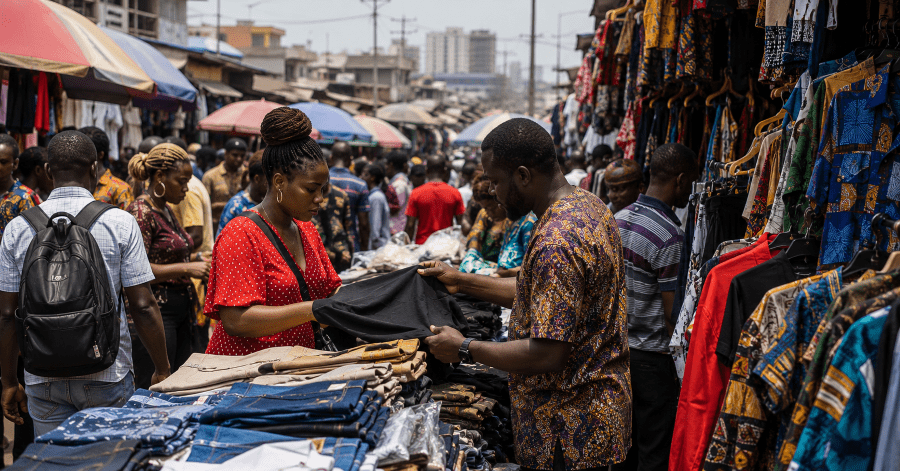
The retail distribution infrastructure of your specific African market affects which product categories are commercially viable and which are not. In markets with strong formal retail infrastructure, including shopping malls, established chain retail, and organised wholesale distribution networks, a broader product range with more fashion-forward categories is viable. In markets where retail is predominantly informal, including open markets, small independent traders, and mobile retail formats, simpler, durable, value-driven product categories are what move.Understanding the distribution environment you are operating in shapes not just what you source but how you package it, how you price it, and what volumes are realistic for your wholesale ordering cycle.Putting This Understanding Into Practice
The groundwork covered in this article, understanding your specific sub-market, its price sensitivity, its climate, its cultural purchasing drivers, and its distribution infrastructure, is the foundation that makes every downstream sourcing decision more effective. Buyers who do this work before they place a wholesale order are the ones who build retail operations that grow rather than stagnate.For buyers who have done that groundwork and are ready to build an African retail range, understanding what [clothing export to Africa](internal link) from Dubai involves, including freight options, transit times, documentation requirements, and the logistics advantages of sourcing from Jebel Ali, is the practical next step.Get in touch and tell us about your specific market. We will bring the right product knowledge and sourcing experience to help you build an order that actually fits your retail environment.